Version of this project
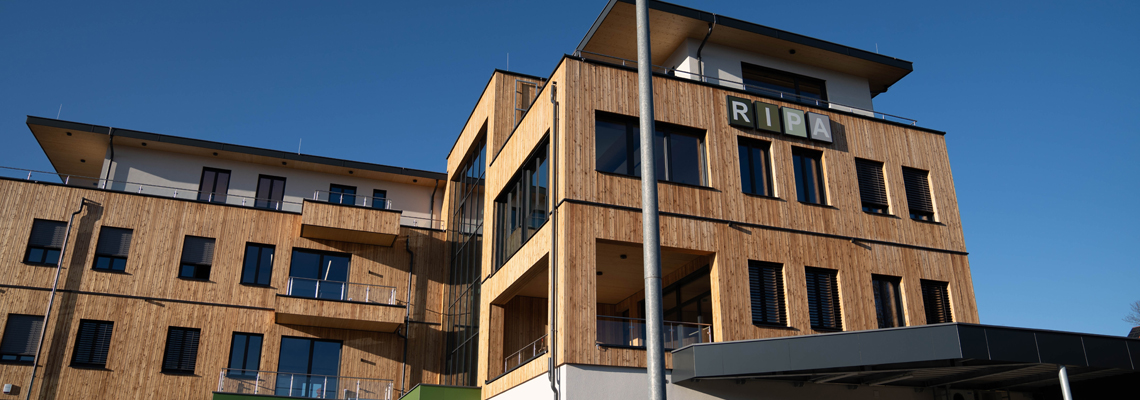

Wood-based building products were used for the renovation and extension of an existing office building. The renovation was done carefully, respecting the existing structure and soil without using more space on the site. Three new floors were added, keeping the original exterior walls and pile foundation intact.
The new structure was built entirely with wood, except for the staircase, which was made of precast concrete elements for structural reasons.
Materials
Prefabricated cross-laminated timber elements (Sylva™ CLT Walls, Floors and Roofs by Stora Enso) were predominantly used, supplemented by glue-laminated timber (GLT/glulam), sawn timber made from spruce and larch as well as softwood fibre insulation materials.
A total of 768 m³ of wood products were processed, including:
- 540 m³ Sylva™ CLT Walls, Floors and Roofs
- 21 m³ GLT/glulam
- 58 m³ sawn timber (spruce/larch)
- 149 m³ softwood fibre insulation
The decision to use Sylva™ CLT elements as the primary building material was based on their structural performance, suitability for prefabricated construction, and compatibility with the project requirements.
The rear-ventilated façade made of local larch underlines the clear architectural design language and supports the regional value chain.
Wooden windows and wood-fibre insulation were used as part of the building envelope concept.
Parts of the roof surfaces were extensively greened, creating an additional ecological functionality. For rainwater and wastewater, only the existing sewage system was used as another resource-saving measure.
Carbon footprint
The Sylva CLT elements only generated 28 tonnes of greenhouse gases (CO₂e) to manufacture and 3 tonnes of CO₂e to transport. Compared to the 411 tonnes of carbon dioxide that the trees removed while they were growing and will store in the office building, this amount is a small fraction. Choosing Sylva CLT elements instead of non-renewables avoided 617 tonnes of greenhouse gases. Source: Stora Enso Carbon Calculator based on third-party verified EPDs .
Operational energy
The building's energy supply consists of:
-A photovoltaic system with 82 modules and a capacity of 36.9 kilowatt peak produces electricity on the roof.
-Two inverters and 12 electric charging stations ensure that the company's steadily growing electric fleet can be efficiently supplied.
For heating, district heating from biomass is used - distributed via underfloor heating with approximately 14,200 running metres of installed piping.
Cooling is provided by a heat pump with a cooling function. While modern fan coils ensure a comfortable indoor climate on the ground floor, over 55 cooling sails with a total area of 228 m² are used in the upper floors.
The project is characterised by an integrated planning approach and the extensive use of timber construction methods.
| Area (m²) | 2,100 |
| Storeys | 3 |
| Units | 1 |
| Products and Services | Sylva™ CLT Floors and Roofs, Sylva™ CLT Walls |
| Services | Calculatis |
| Product quality | VI, NVI |
| Product volume (m³) | 540 |
| Partner of Stora Enso | ZMP Holzbausysteme |
| Developer | RIPA Mehrwertplus GmbH |
| Architect | Ringhofer & Partner GmbH |
| Structural Engineer | ZMP GmbH |
| Specialist Timber Subcontractor | Zimmerei Christian Gruber |